Views: 0 Author: Site Editor Publish Time: 2025-11-03 Origin: Site


A graduated cylinder lets you measure liquid amounts very accurately in the lab. This glassware is important when you want results you can trust for science experiments, medical tests, or growing cells. Measuring exactly helps you avoid mistakes. Mistakes can change how treatments work and affect experiment results. The table below shows how measuring liquids well helps important parts of research and medical tests:
Aspect | Description |
|---|---|
Role in Diagnostics | Liquid chromatography separates parts for correct disease diagnosis. |
Sensitivity | Finds tiny amounts of compounds, which helps with health checks. |
Drug Monitoring | Makes sure drugs are given safely for special medicines. |
Biomarker Discovery | Helps find signs of disease early and tells how it may progress. |
Advanced Techniques | Mass spectrometry helps find and measure metabolites better. |
Graduated cylinders help you measure liquid amounts very accurately. They are important for science experiments and medical tests.
Pick the right size graduated cylinder for your job. This helps you get exact measurements and stops errors.
Always look at the meniscus at eye level. This gives you the correct liquid amount and better results.
Graduated cylinders are more exact than beakers or flasks. That is why people use them for careful liquid measuring.
Use the right methods and clean tools. This helps you get good results in your experiments and research.
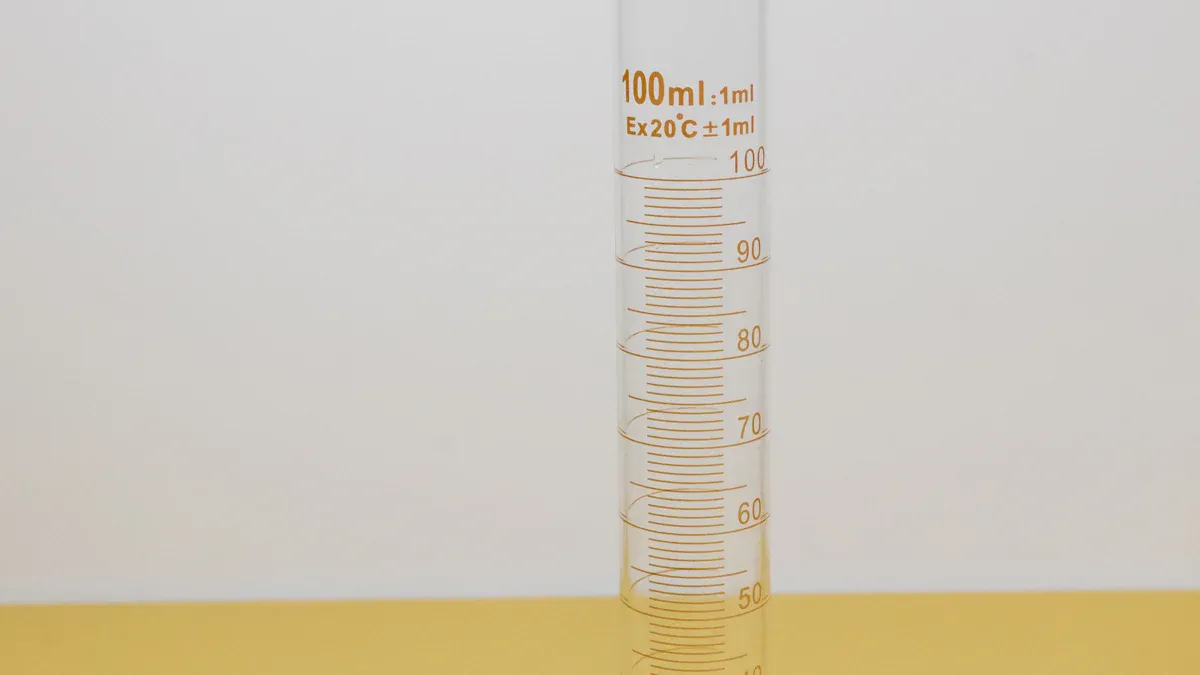
A graduated cylinder is tall and thin. It has lines on the side. These lines are called graduations. You use it to measure how much liquid you have. This tool helps you get the right amount in science labs. It is used for chemicals, medicines, and samples.
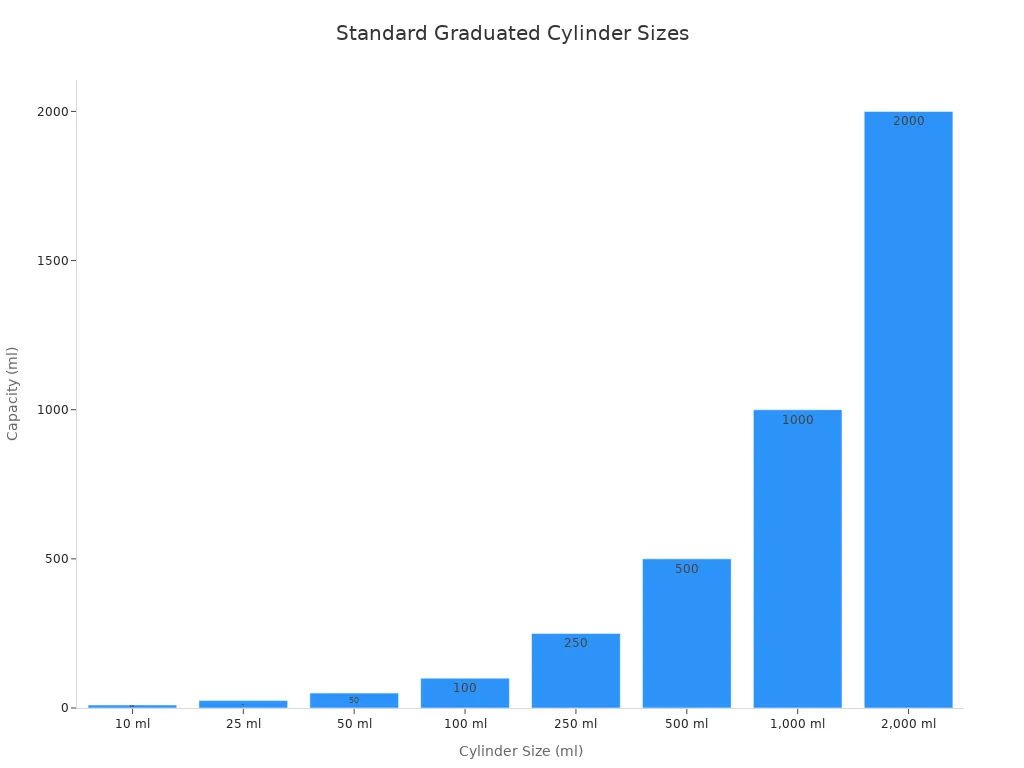
Graduated cylinders come in different sizes. You can pick a small one for little amounts. You can pick a big one for more liquid. Here is a table that shows common sizes and how much they hold:
Size (ml) | Capacity (ml) |
|---|---|
10 | 10 |
25 | 25 |
50 | 50 |
100 | 100 |
250 | 250 |
500 | 500 |
1,000 | 1,000 |
2,000 | 2,000 |
You see graduated cylinders in labs everywhere. Scientists, doctors, and students use them often. The graduated cylinder is simple but very useful. It measures liquids better than a beaker or flask.
The material of the cylinder is important. Some are made of glass. Some are made of plastic. Glass cylinders have clear lines and measure well. Plastic cylinders, like food-grade polypropylene, do not break easily. Both types help you get good results.
Tip: Always check what your graduated cylinder is made of before you use it. This helps you stop problems with the liquid you measure.
Graduated cylinders have been used in science for a long time. Pyrex glass made them stronger in the early 1900s. By 1916, Pyrex glass was common in labs. It made measuring safer and better.
International rules help you trust your measurements. ISO 4787:2010 and ISO 4787:2021 are rules for testing and checking graduated cylinders. Other rules, like ISO 385 and ISO 835, also help you measure and know the right amount.
Graduated cylinders measure liquid volume very well. You use them when you need to know the exact amount. This is important in cell culture, diagnostics, and checking quality.
When you use YOCON Biotech products, you need careful measuring. Our Cellular Therapy, Stem Cell Product Line, Exosome Product Line, and Immune Cell Product Line all need good liquid handling. For example, when you make serum-free media for cells, you must measure each part. Graduated cylinders help you get the right mix every time.
Here is a table that shows how graduated cylinders and volumetric flasks compare:
Feature | Graduated Cylinder | Volumetric Flask |
|---|---|---|
Accuracy | ± 0.5 – 1.0% (Class A more precise than Class B) | ± 0.1% or better (single calibration mark) |
Best Use | Approximate volume measurement, titration prep | Precise measurement of fixed volumes |
Lab workers trust graduated cylinders. They check the shape inside, the temperature, and the air pressure. They use special tools to make sure their measurements are right.
Graduated cylinders are used in many jobs. You use them for virus nucleic acid extraction, making stem cell media, and checking quality. You can see all our products that need good measuring at YOCON Biotech Products.
Note: Using the right way with graduated cylinders helps you get the best results. Always look at the liquid at eye level. Use the right size cylinder for your job.
Graduated cylinders measure liquid volume very well. You can trust them for your science, tests, and making new products.
A graduated cylinder is tall and thin. This shape helps you measure liquids better than a beaker or flask. The cylinder stands straight up. It has lines called graduations on the side. These lines show how much liquid is inside.
You can pick cylinders made of glass or plastic. Glass cylinders have clear marks that are easy to see. Plastic cylinders, like polypropylene, do not break easily. Both types help you measure safely and well.
Graduated cylinders have different accuracy levels. Class A cylinders are twice as exact as Class B cylinders. You choose the class based on how careful you need to be.
Key features that make graduated cylinders special:
Tall, thin shape for better measuring
Clear, spaced lines for reading amounts
Made from strong glass or plastic
Many sizes and accuracy levels to pick from
Tip: Always check if the lines are clean and easy to see before you measure. This helps you avoid mistakes.
You need to follow steps to measure liquid correctly. First, put the graduated cylinder on a flat table. Pour the liquid slowly so it does not splash. Look at the liquid at eye level. You will see a curve at the top called the meniscus. Read the number at the bottom of this curve.
If you look from above or below, you might read the wrong amount. Always keep your eyes even with the line.
Graduated cylinders have a small error margin. Class B cylinders have about a 0.5% error. Class A cylinders are even more exact. This helps with important jobs in molecular diagnostics and cell therapy. At YOCON Biotech, we use graduated cylinders to make serum-free media, mix reagents, and check quality in our products.
Steps for measuring liquid the right way:
Put the cylinder on a flat table.
Pour the liquid slowly.
Line up your eyes with the meniscus.
Read the amount at the bottom of the curve.
Note: Measuring liquid the right way helps you get good results in research, diagnostics, and cell culture.
You need the right tool for good measurements. Graduated cylinders help you get results you can trust. Beakers and flasks look alike, but they are not as exact. Here are the main differences:
Beakers hold and mix liquids. They only give rough guesses for volume.
Graduated cylinders are made for measuring. Their thin shape helps you see the liquid level better.
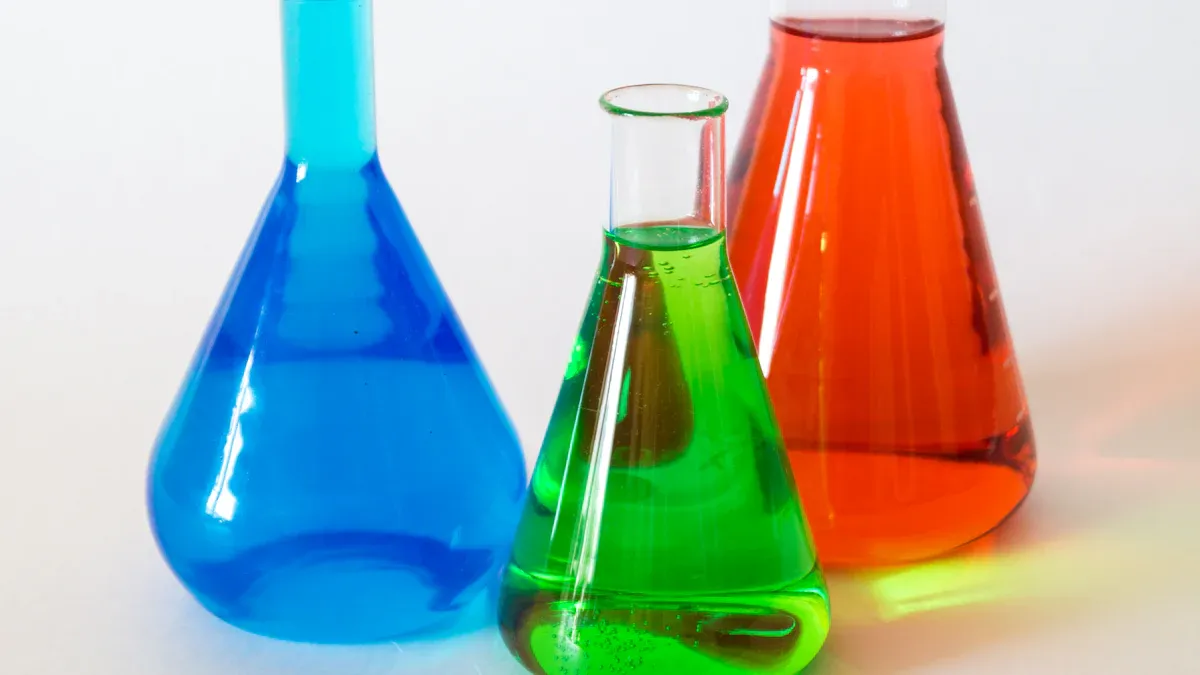
Flasks, like Erlenmeyer flasks, are good for mixing and swirling. They do not measure volume well.
Graduated cylinders are accurate within about 1 percent. Beakers and flasks can be wrong by 10 percent or more. If you want to be sure of your results, use graduated cylinders to measure liquids.
Tool | Accuracy Level | Best Use |
|---|---|---|
Graduated Cylinder | About 1% | Accurate measurements of liquids |
Beaker | About 10% | Mixing, rough estimates |
Flask | About 10% | Mixing, swirling |
Tip: Use graduated cylinders when you need exact amounts for experiments, making products, or checking quality.
Pick graduated cylinders when you need careful measurements. They are great for making solutions, mixing chemicals, and checking product quality. At YOCON Biotech, we use graduated cylinders to make sure every batch is correct. Good measuring helps us make serum-free media, prepare virus tubes, and do molecular tests.
You can use graduated cylinders for:
Measuring liquids for cell work and therapy
Mixing chemicals for molecular tests
Checking quality when making products
Lab jobs when pipettes or burettes are not easy to use
Quality by Design helps us do our work well. Graduated cylinders help us make fewer mistakes and keep products safe. Good measuring protects important materials and lowers the chance of contamination. When you pick the right tool, you help make better research and safer products.
Graduated cylinders are used in many places. They help you measure liquids carefully. You see them in science labs, factories, and schools.
Graduated cylinders are common in chemistry and biology labs. They help you measure liquid amounts very well. You use them for different jobs:
Measuring liquids for experiments
Measuring gas volume with water displacement
Finding solid volume by seeing water rise
Here is a table that shows how labs use graduated cylinders:
Application | Description |
|---|---|
Measuring liquid volumes | You get better results than with flasks or beakers. |
Measuring gas volumes | Water displacement helps you find out how much gas there is. |
Indirect measurement of solids | Put a solid in water and see how much the water goes up. |
At YOCON Biotech, graduated cylinders are important for many jobs. You use them to make serum-free media for stem cells. You mix reagents for molecular tests. You measure liquids for nucleic acid extraction. Careful measuring helps you get good results.
Tip: Pick the smallest graduated cylinder that works for your job. This gives you the best accuracy.
Graduated cylinders are not only for labs. Factories and schools use them too. In factories, they help check product quality and mix chemicals. In schools, students learn to measure liquids and follow safety rules.
Graduated cylinders help with accurate liquid checks in factories.
Students learn to read the meniscus and not overfill.
You choose the right cylinder by size, material, and resistance.
When you use our Quality Inspection Product Line, measuring liquids right is very important. This makes sure every batch is good. You can learn more about our products at YOCON Biotech Products.
Graduated cylinders help you get good results in science, factories, and schools. Using the right tool helps you trust your work.
To get the best results, you need to read the graduated cylinder the right way. The meniscus is the curved line at the top of the liquid. If you want to avoid mistakes, follow these steps:
Put the graduated cylinder on a flat table.
Make sure it stands up straight.
Lower your eyes to the same level as the liquid. This helps you see the right spot.
Look for the meniscus. For water and most liquids, read the lowest part of the curve.
Hold the cylinder steady and wait for the liquid to stop moving.
Use bright light so you can see the lines and meniscus well.
Always use clean and dry tools.
Write down your measurement right after you read it.
Tip: If you are measuring mercury, read the top of the curve instead.
If you follow these steps, your measurements will be as correct as possible. This is very important for research, tests, and cell work.
You can stop many mistakes by using good habits every time you measure. Here are some things to remember:
If you read the meniscus from above or below, you can make the same mistake every time.
Using the wrong size cylinder can make your measurement less correct.
Dirty or wet cylinders can change what you see.
If you rush or do not let the liquid settle, you can get the wrong answer.
Not knowing the right way or not being trained can cause mistakes.
Note: Always pick the right size graduated cylinder for your job. Training and practice help you avoid mistakes and get good results.
When you use the right steps, your experiments and tests will be more correct. At YOCON Biotech, we use these good habits for cell work, tests, and checking quality.
A graduated cylinder lets you measure liquids very carefully. People use it to make solutions and check quality in labs and factories. The clear lines and many sizes help you pick the right one for your work. If you use good lab habits, your results will be correct. This helps your experiments go better. Learning the right way to use lab tools helps doctors and scientists do their jobs well.
Remember: Careful measuring and learning the right way help you avoid mistakes and do good science.
Feature | Description |
|---|---|
Precise Liquid Measurement | Needed for correct solutions and tests. |
Compatible with ISO Standards | Follows strict lab rules. |
Requires Training | Using it right gives you correct results. |
Put the cylinder on a flat table. Lower your eyes to the liquid’s level. Look for the bottom of the meniscus. Read the number at that spot. This way, you will not make mistakes.
Class A cylinders measure more exactly. Class B cylinders are good for normal lab jobs. Pick Class A for research or medical tests. Use Class B for everyday work.
Think about how much liquid you need to measure. Pick a cylinder that fits that amount. Use glass if your liquid reacts with plastic. Use plastic if you want it to be safer. Check the accuracy class for your needs.
Graduated cylinders measure liquids more exactly than beakers. Use them when you need the right amount. Beakers are better for mixing or holding liquids, not for careful measuring.
Use graduated cylinders to measure liquids first. Then pour the liquid into a beaker or flask to mix. This helps you keep your measurements correct.